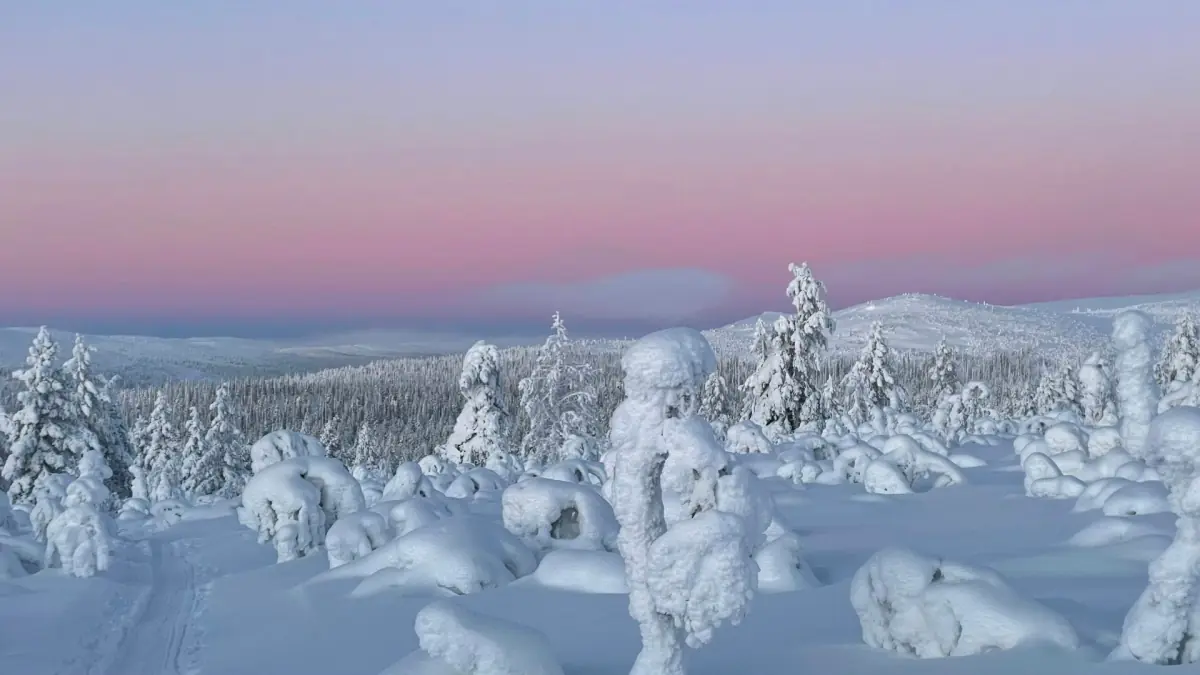
Choosing the best time to see northern lights in Lapland
The best time to see northern lights in Lapland falls within the dark viewing season, roughly September to April, rather than one universally reliable week. Rovaniemi, Levi, Saariselkä and Inari share the need for a dark sky and a clear view, but their weather on a particular evening can differ. Choose your season around what you want to do in daylight as well as the possibility of an aurora after dark.
Finnish Lapland's bright summer nights prevent aurora viewing even though the physical process is not restricted to winter. A snowy landscape is a separate consideration: darkness can return before conditions support a sleigh ride. Start with the regional northern lights guide for the different bases, then use the forecast guide for decisions close to departure.

Autumn and spring bring different advantages
Finnish Lapland's autumn and spring have somewhat increased auroral activity, while cloud cover still controls whether you can see it. FMI highlights March and early April when taking northern Finland's weather into account. Its separate FAQ also points to February and March, alongside September and October. These are useful seasonal pointers with different emphases, rather than a ranking that identifies one winning month.
September and October suit a plan centred on dark skies without making snow activities the main purpose. March and early April deserve consideration when you want a spring viewing window. Neither choice supplies a personal success percentage. A favourable month can contain overcast evenings, and the sky can change while you are already travelling. Keep the date decision separate from the final choice of observing location.
Our pick: forecast-led search
Continuous weather and forecast analysis helps guide this aurora outing.
Hand-picked tours, booked through GetYourGuide. Prices are indicative starting prices in euros (as of November 2026). Tap a tour for live availability and the current price in your currency.

A Rovaniemi outing with weather analysis
The eight-hour northern lights search combines ongoing forecast analysis with a guide, high-resolution photos, pickup and drop-off, hot drinks and light snacks. It is an evening activity, not evidence that a particular month is best.
Winter activities need suitable snow
Lapland's sleigh and snowmobile activities depend on suitable snow as well as darkness. FMI distinguishes the first snow cover from a lasting continuous cover, and Lapland's snow depth often reaches its maximum only in early April. That seasonal pattern cannot promise a particular depth at Christmas or a fixed date when every route opens.
December offers a winter setting, but a calendar booking alone cannot settle the route conditions or cloud cover. Read the snowmobile guide and reindeer sleigh guide for the activity itself. Weather can change schedules, routes and duration under the individual tour's terms. An evening without aurora does not by itself establish a right to a refund or a replacement outing.
Rovaniemi climate averages for all twelve months
Rovaniemi lentoasema station provides a climate reference for Rovaniemi, not a forecast for the whole of Finnish Lapland. The table uses FMI's 1991 to 2020 normal period, published in report 2021:8 in October 2021. Highs and lows are monthly averages of daily maximum and minimum temperatures. Precipitation includes snow expressed as water equivalent.
| Month | Average high °C | Average low °C | Precipitation mm |
|---|---|---|---|
| January | −7.3 | −13.5 | 46 |
| February | −7.3 | −13.3 | 37 |
| March | −1.9 | −9.1 | 37 |
| April | 4.1 | −3.4 | 34 |
| May | 11.0 | 2.5 | 48 |
| June | 17.0 | 8.5 | 64 |
| July | 20.1 | 11.8 | 81 |
| August | 17.2 | 9.6 | 68 |
| September | 11.1 | 4.9 | 60 |
| October | 3.1 | −1.3 | 54 |
| November | −2.1 | −6.7 | 55 |
| December | −4.9 | −10.6 | 51 |
Rovaniemi's monthly averages cannot describe the temperature of an individual night in Inari, Levi or Saariselkä. They also say nothing about safe lake ice. Pack for the actual weather and the time spent standing still; the camera and clothing guide explains the practical preparation.
Trip length without a success calculation
A stay in Finnish Lapland should remain worthwhile when clouds prevent aurora viewing. Leave room for rest and your chosen daytime activities instead of treating every night as an independent chance that can be added into a success formula. Seasonal statistics describe particular sky conditions, not the outcome of a booked stay.
The northern lights tours comparison helps separate transport, photographs and pickup arrangements. The Rovaniemi weather-analysis outing includes light snacks and hot drinks rather than a full meal. Choose an activity for those concrete services, and leave the natural display as a possibility rather than a promised event.
Questions about Lapland's viewing season
Can I see northern lights in Lapland in summer?
No. Finnish Lapland's bright summer nights prevent aurora viewing, although auroral activity itself is not confined to winter. Plan an observing trip within the approximate September to April dark season. Snow activities have their own conditions, so the arrival of darkness alone does not establish a sleigh season.
Which months should I consider first?
March and early April receive emphasis from FMI when northern Finland's weather is included. FMI's FAQ also highlights February and March and September and October. Use these as seasonal pointers, then choose around your other activities. None identifies a single reliable week or removes the need for clear skies.
Does December guarantee snow for a safari?
No. A December date cannot guarantee enough snow for every Lapland safari route. First snowfall and continuous snow cover are different measures, and activity operation depends on conditions. Keep the specific tour's weather terms in mind and use the forecast close to your visit rather than relying on monthly climate averages.